The meaning behind the emoji
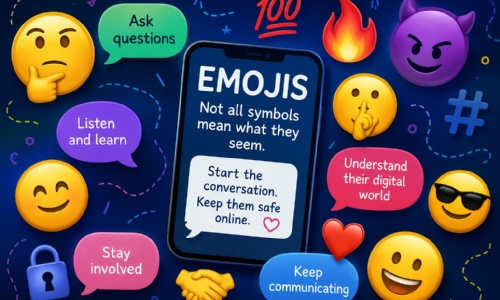
As young people spend increasing amounts of time online, it is important for adults to stay informed about the ways communication can sometimes be hidden in seemingly innocent messages or emojis.
Emojis and online symbols can sometimes carry meanings that many adults may not recognise. While many emojis are used harmlessly, some may occasionally be linked to concerning online behaviour or communities. Open communication and awareness are key to helping children stay safe online.
What can parents and carers do?
1. Be curious, not confrontational
Ask open and supportive questions such as:
“I read that some emojis can have different meanings online — have you heard about this?”
Keeping conversations calm and approachable encourages children to engage honestly.
2. Create a judgement-free environment
Children are more likely to speak openly if they know they will be listened to and not judged for what they are sharing.
3. Learn together
Take an interest in your child’s online world. Ask about the apps they use, the influencers they follow, and how they communicate with friends. Avoid assumptions and encourage discussion.
4. Encourage critical thinking
Help children think carefully about what they see online by asking questions such as:
“Why do you think people share this?” or “Who benefits from this message?”
5. Stay involved without spying
Regular, open conversations about online activity are often more effective than secret monitoring. Make online safety a normal part of family discussion.
6. Talk about online manipulation
Some online groups target young people by making them feel included, valued, or part of an “inside group.” Helping children recognise these tactics can support safer choices online.
7. Build confidence offline
Children who feel confident, connected, and valued in everyday life are often less likely to seek validation in unsafe online spaces.
Here are some websites that might be helpful: